We reward people for DOING something: you get paid for the hours you work, you reward your kids with a family ice cream party when they finish a school book or grade in school, you give them a treat when they finish cleaning their rooms, etc. The reward is tied to the accomplishment - pursuing something to its end goal. However, if you got the reward for nothing, given money regularly without working for it, it would lose its value. We don't tend to utilize well or appreciate things received lightly, easily. We take them for granted, thereby bypassing the true blessing of that reward and squandering it.
 I think that's why we have to seek out peace and any good thing, to appreciate it and utilize it well. If we are given something before it's time, before we've sought it out, wrestled for it, we could end up like Israel: obtaining what we want be in exchange having leanness of soul\. It would end up taking from us much more than it gave and the very thing we wanted would destroy us because we're not ready to carry the weight and responsibility of it.
What if King George had walked away from America, had given the land to the colonists without a fight - they had a peaceable transition of power? Would we as a fledgling nation have been able to formulate such a solid government structure, known what we wanted and didn't want and wrestled over big ideas that changed a world if we had obtained it lightly? Would we have appreciated peace, had we not wartime first?
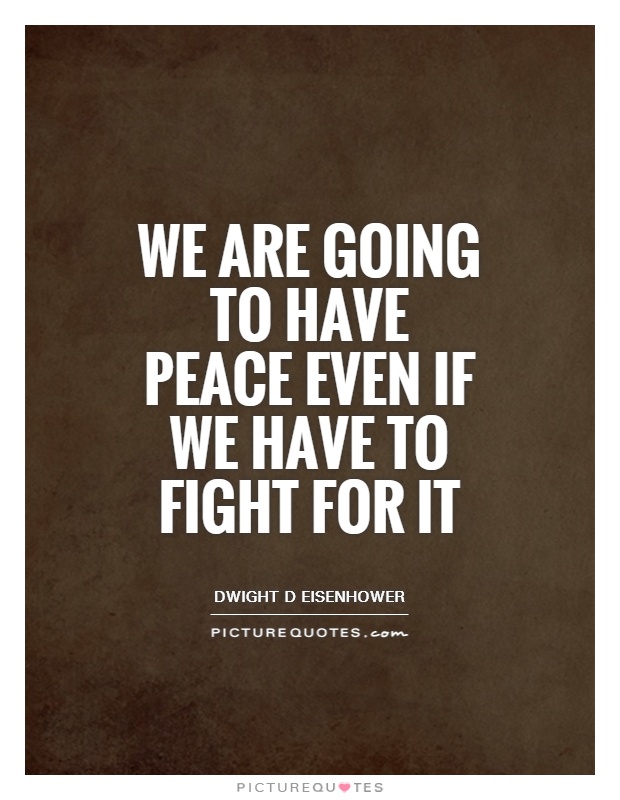 Sometimes in the midst of seeking, of desperately needing it and wanting it, it's hard not to be resentful when peace or that thing we are seeking seems so intangible, so far away. I'm reminding myself that there's a purpose in the seeking, there's a growth, a deeper level of understanding and need and will be a deeper appreciation and experience of the many facets of peace as it is revealed and walked out. Not that life is absent of it or that there aren't great blessings of supernatural peace in difficult situations along the way, but I want to learn to walk in it 24-7, unshaken, unshakable.
Isaac Newton new what it meant to have to fight for everything he wanted or pursued in life and wrote this hymn out of the struggle. His story Story of Isaac Watts
Beautiful rendition of song
Am I a Soldier of the Cross
1 Am I a soldier of the cross,
a foll'wer of the Lamb?
And shall I fear to own His cause
or blush to speak His Name?
a foll'wer of the Lamb?
And shall I fear to own His cause
or blush to speak His Name?
2 Must I be carried to the skies
on flow'ry beds of ease,
while others fought to win the prize
and sailed through bloody seas?
on flow'ry beds of ease,
while others fought to win the prize
and sailed through bloody seas?
3 Are there no foes for me to face?
Must I not stem the flood?
Is this vile world a friend to grace
to help me on to God?
Must I not stem the flood?
Is this vile world a friend to grace
to help me on to God?
4 Sure I must fight, if I would reign;
increase my courage, Lord;
I'll bear the toil, endure the pain,
supported by Thy Word.
increase my courage, Lord;
I'll bear the toil, endure the pain,
supported by Thy Word.
5 Thy saints in all this glorious war
shall conquer, though they die;
they see the triumph from afar
by faith's discerning eye.
shall conquer, though they die;
they see the triumph from afar
by faith's discerning eye.
6 When that illustrious day shall rise,
and all Thine armies shine
in robes of vict'ry through the skies,
the glory shall be Thine.
and all Thine armies shine
in robes of vict'ry through the skies,
the glory shall be Thine.




 It's so easy to live all wound up, tense and judgmental - quickly coming down on negative/bad behavior, but we're often less quick to impart peace, to let someone know that no matter what has happened in the past - we hold them harmless, exonerate them from any retaliation or emotional repercussions. Forgiveness means that as their weakness flows toward us (being injured themselves or hurt by others), our strength flows toward them (we go take up our cross of forgiveness and carry their burden of sin for them). When we respond in anger, the core of that is self-love whereas forgiveness requires self-sacrifice. To be broken and then forgive causes our suffering to be our glory. In 2Cor. 2, Paul adjures those who have been caused grief by others to forgive and comfort the offender, reaffirm your love and not allow the person who has offended to be swallowed up in grief over their sin. And repeatedly we are instructed to forgive in the same manner as Christ forgave us, even tying to it the forgiveness of the Father. For, forgiveness is our glorious warfare which can open up wells of revival in the midst of our lives, family and community. Forgiveness is a choice of will and the proofs of forgiveness are exemplified in Joseph's forgiveness of his brother, extending peace to them when they feared his retaliation.


 Walking in peace, it takes courage. Repeatedly in Scripture, different ones are given the injunction: "Do not be afraid, be strong and of good courage." There are many, every day stories of courage to stand up against great opposition, stand for conviction like Kim Davis, who wouldn't back down and sign the homosexual marriage certificate and subsequently spent 6 days behind bars. But what I find to be my greatest struggle is not the courage to stand publicly on Biblical issues or points of conviction, but the courage to stand daily, quietly, firmly against my flesh and feelings. In the midst of a culture that is all about following your heart and your ever-changeable feelings, I find my biggest battle ground, my greatest need for courage. The courage not to stand for my own needs, desires or feelings but to lay them down to stand on God's truth, His joy, His sacrifice, His love. God grant me the courage to stand and fight the good fight of faith in my own heart and soul, the courage to respond in grace and gentleness when faced with disrespect, disregard, disinterest or distaste. The courage to love when it hurts and press through the pain to keep on loving. The courage to be vulnerable to know and be known, be let down and get back up. The courage to look with tenderness and kindness rather than shoot angry darts and hurtful glances. The courage to reveal the kingdom when life looks like the enemy's winning and hope is dying. The courage to get back up and have grace for myself when I've failed again, when my list is too long and my energy too short, when brokenness rather than joy seems to be my song.